


3D Microfluidic Solenoid with Percision Early Detection
Research Abstract
This research project is on creating a microfluidic solenoid to detect and count target blood cells, for example white blood cells or CD4+ T cells, which gives a snapshot of how well the immune system is functioning. The target cells bind with a protein that is tagged with magnetic nanoparticles through antigen + antibody binding. These magnetized cells flow through a microfluidic solenoid, which induces a voltage in the solenoid based on Faraday's law. The signals are amplified using a low-noise amplifier circuit, and the induced pulses are counted. The system is a small, portable, battery-powered medical diagnostic device which has advantages over the current laser-based, large, heavy, and expensive flow cytometers.
Related publications
[1] J. Lee, M. Nolan and H. Lee, "Feasibility Study of a Microfluidic Solenoid for Discrete Quantitation of Magnetized Cells," in IEEE Transactions on NanoBioscience, vol. 18, no. 2, pp. 240-243, April 2019.
[2] H Lee, B Cook, K Murali, M. Raj, M. Tentzeris, "Inkjet printed high-Q RF inductors on paper substrate with ferromagnetic nanomaterial," IEEE Microwave and Wireless Components Letters, vol. 26, issue 6, pages 419-421, 2016
[3] Leukocyte quantitation microfluidic method and device U.S. Patent
Description
(A)
(B)
(C)
(D)
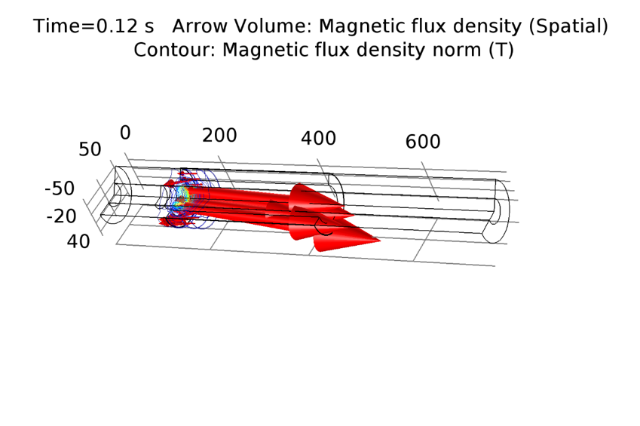
(A) Snapshot in time of the COMSOL simulation of magnetic nanoparticle entering microfluidic solenoid, displaying the induced magnetic fields. Dimensions are length, width, and heigh in microns.
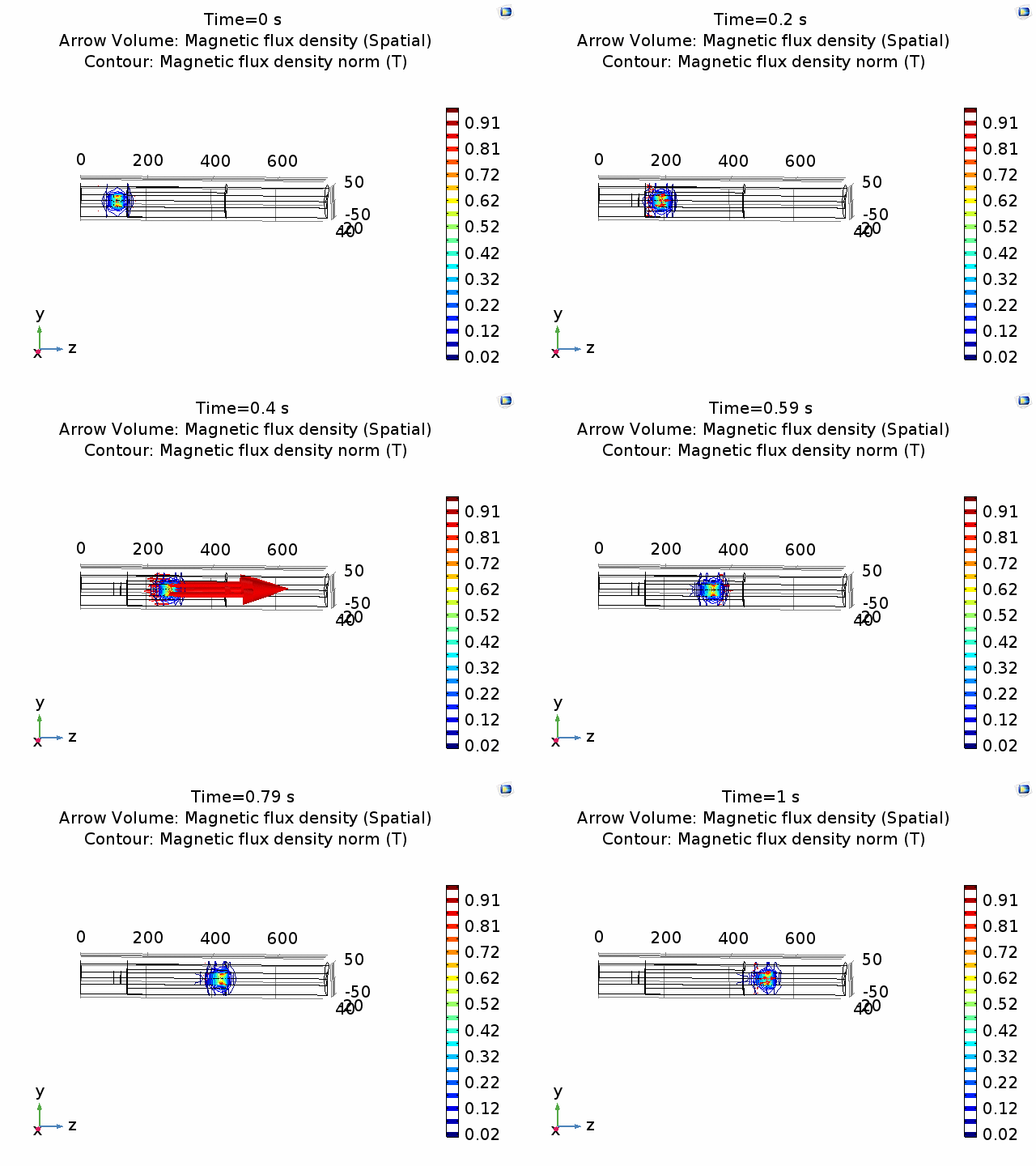
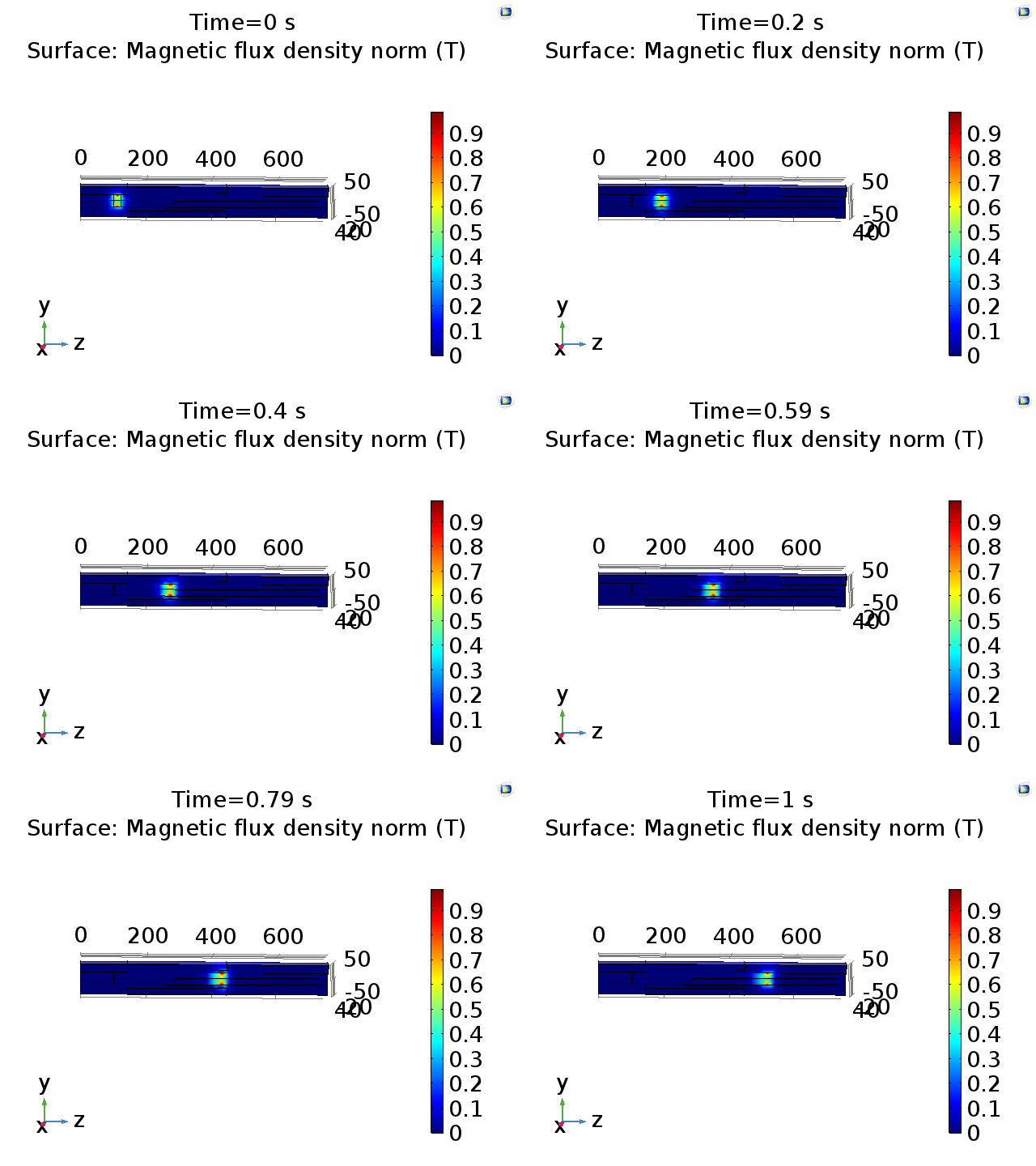
(B & C) Slowed down gif of magnetic nanoparticle flowing through the microfluidic solenoid, inducing magnetic flux in the solenoid.
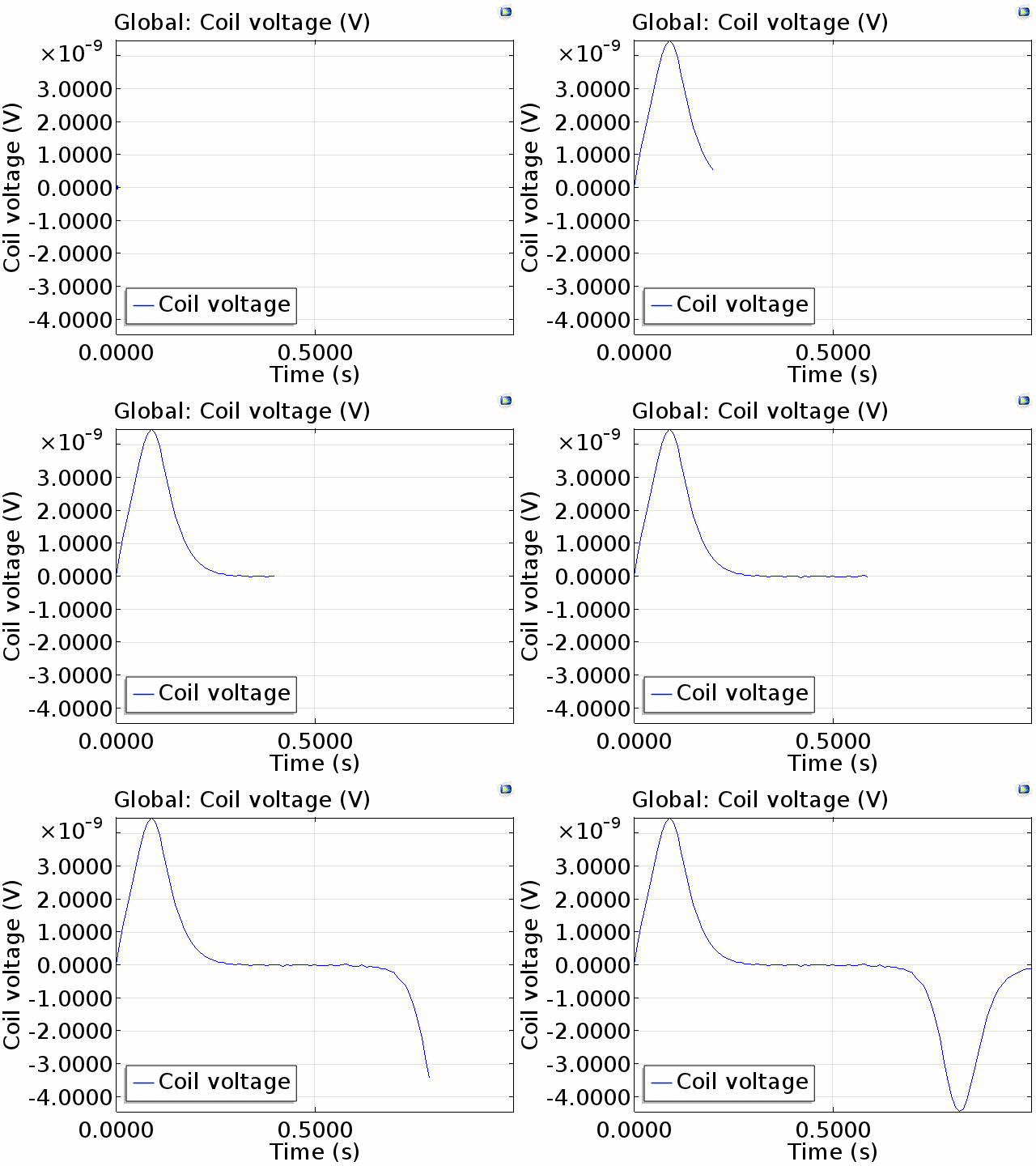
(D) Induced voltage in the coil due to the magnetic nanoparticle flowing inside the coil. The positive and negative pulses are when the magnetic particle enters and leaves the coil.
(A) (B)
(C)
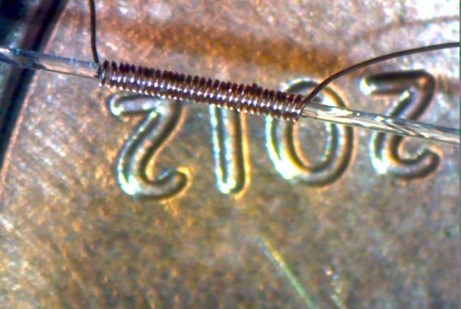
(A) Thin copper wire wrapped around fiber optic cable (150 microns)
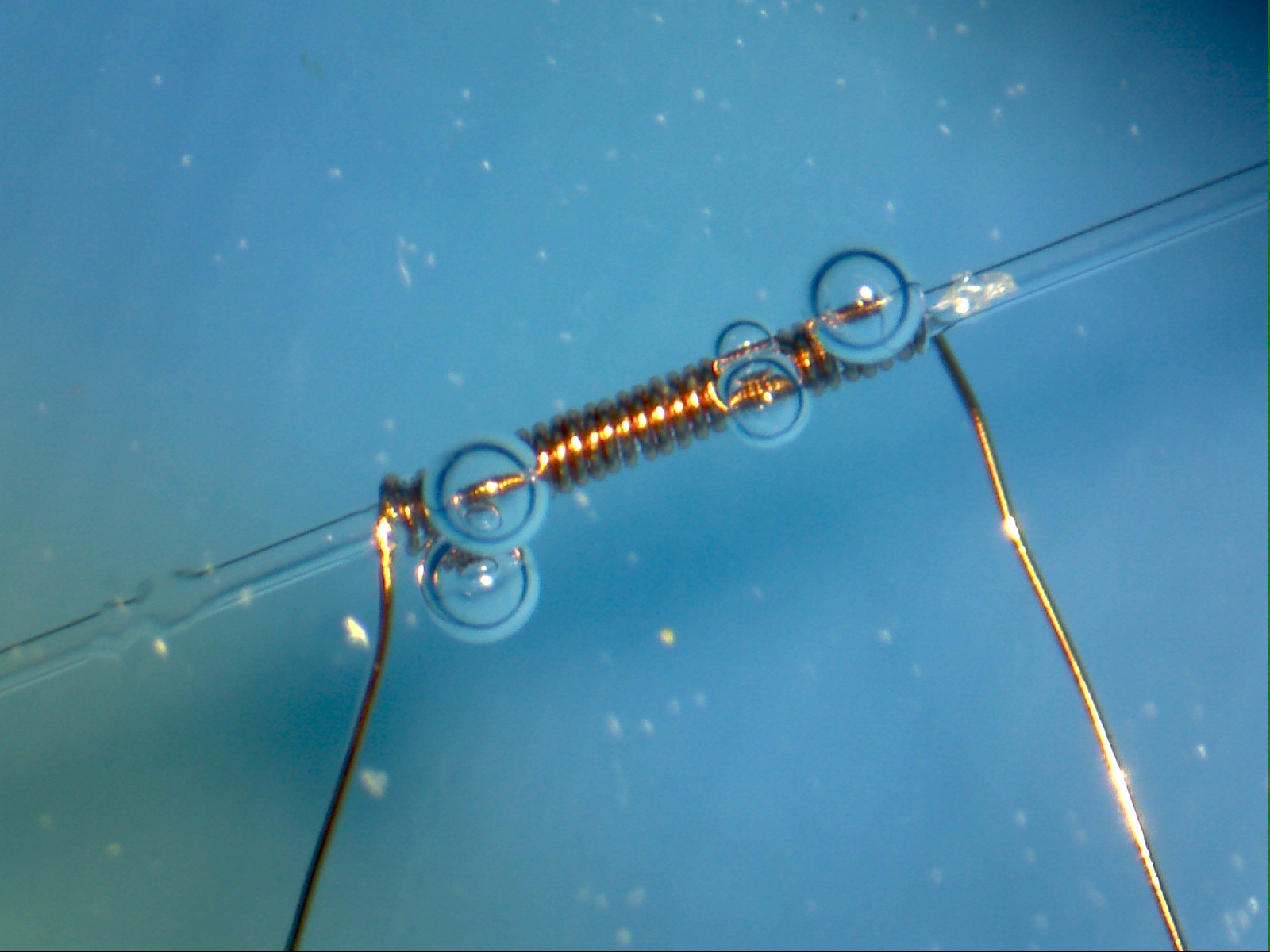
(B) Solenoid immersed in PDMS
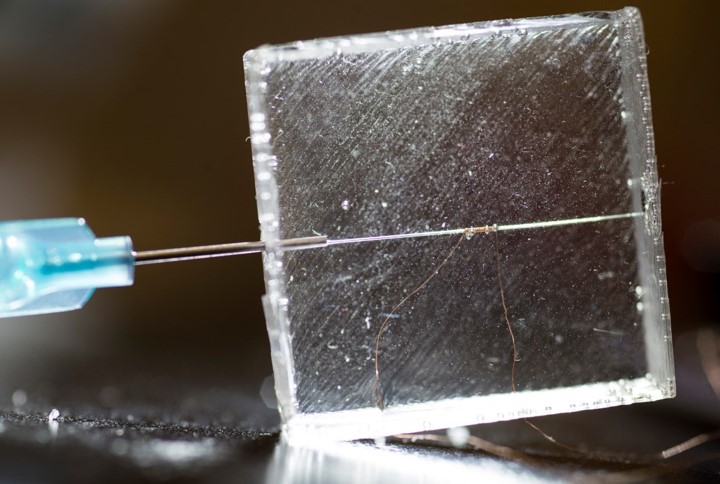
(C) Fabricated microfluidic solenoid in PDMS with syringe to inject magnetic nanoparticles
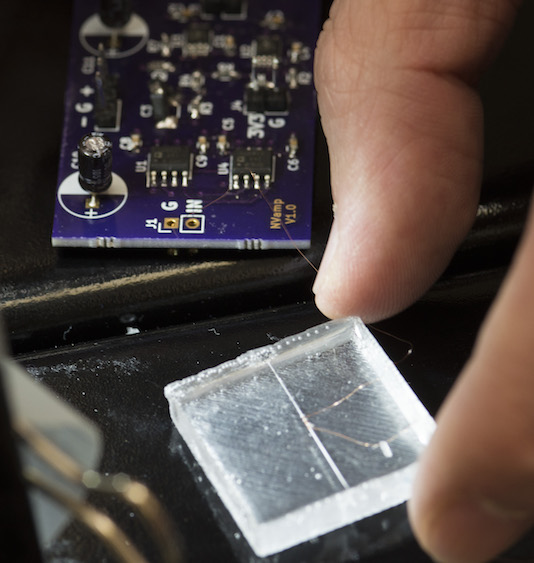
Final prototype of microfluidic solenoid integrated with low noise amplifier circuit to amplify induced signal as magnetic nanoparticle passes through the solenoid.
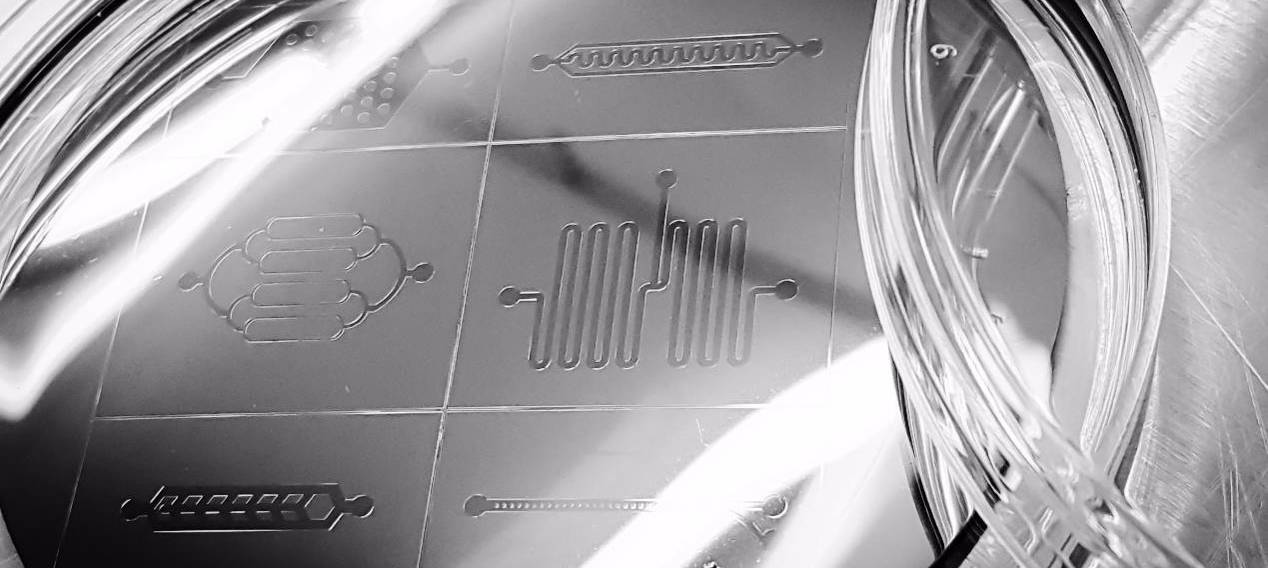
Silicon wafer used to make standard microfluidic channels using soft lithography.
Wireless Power Transfer
Research Abstract
Near-field communication (or NFC) is used for near-field inductive charging, mobile contactless payment, and RFIDs in ID cards. In this research, our focus is on far-field wireless power transfer for low-power applications such as Internet-of-Things (IoTs). The research is based on an RF-to-DC charge pump design and an ultra low power boost converter circuit. Industry standard circuit software, Advanced Design System (ADS) and EagleCAD layout software are used to simulate and layout the circuit. Prototypes are fabricated and populated and tested using vector network analyzers, spectrum analyzers, source meters, and power meters.
Related Publications
[1] H. Lee, R. Nadgauda, W. Thain and B. Diong, "1 GHz charge pump with ultra-low power boost converter for increased output voltage," 2018 IEEE International Symposium on Antennas and Propagation & USNC/URSI National Radio Science Meeting, Boston, MA, 2018, pp. 2543-2544.
Description
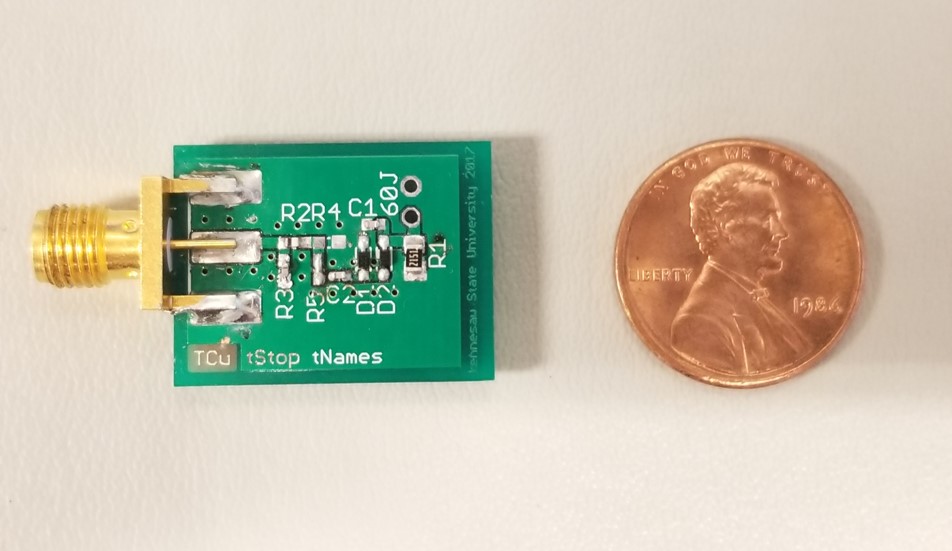
(left) Prototype of 2-stage charge pump
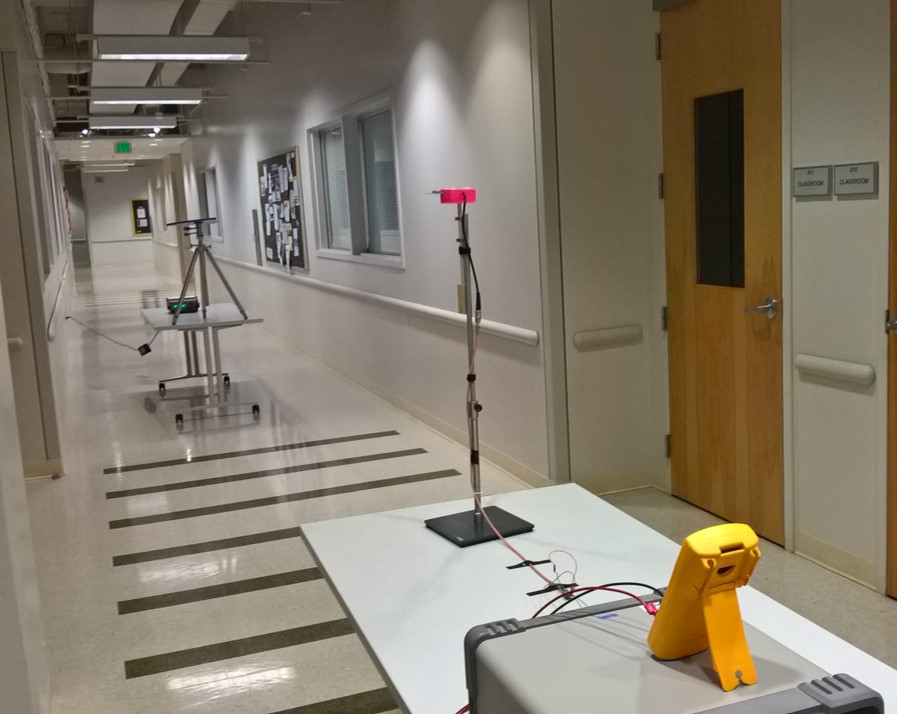
(right) Wireless testing setup using an RF source and directional antenna at transmitter and log periodic receive antenna connected to the 2-stage charge pump and ultra-low power boost converter. Output voltage of 4.2 volts was achieved at a distance of 5.5 meters at 0.5 W transmit power. Close to 8 meters was achieved at 1 W transmit power.


